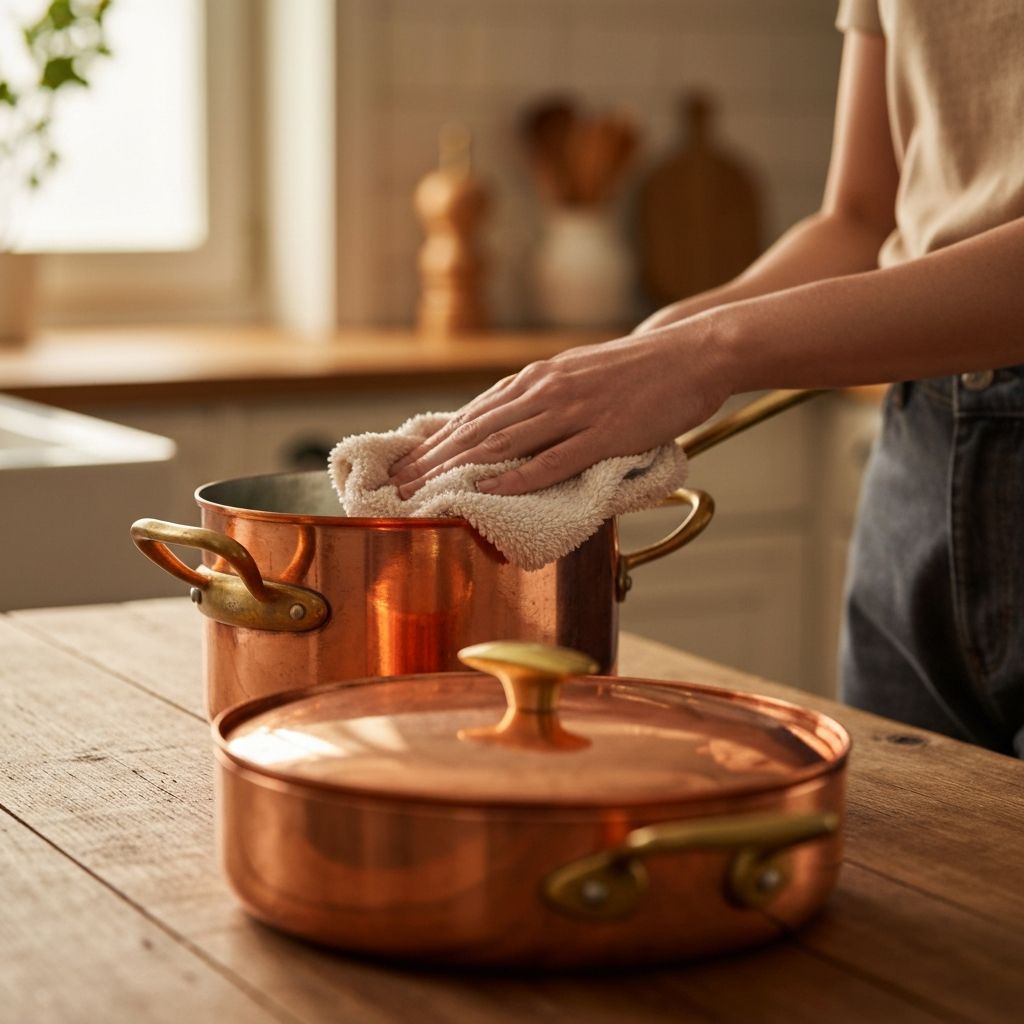
Ruffoni Copper Cookware Care & Maintenance Guide
Expert tips to keep your handcrafted Italian copper cookware beautiful and performing perfectly for generations
Your Ruffoni cookware represents the pinnacle of Italian craftsmanship—handcrafted pieces designed to last for generations. Proper care and maintenance will preserve both the exceptional cooking performance and stunning beauty of your copper cookware. This comprehensive guide covers everything you need to know about cleaning Ruffoni cookware, removing copper patina, polishing silver finials, and maintaining delicate tin linings.
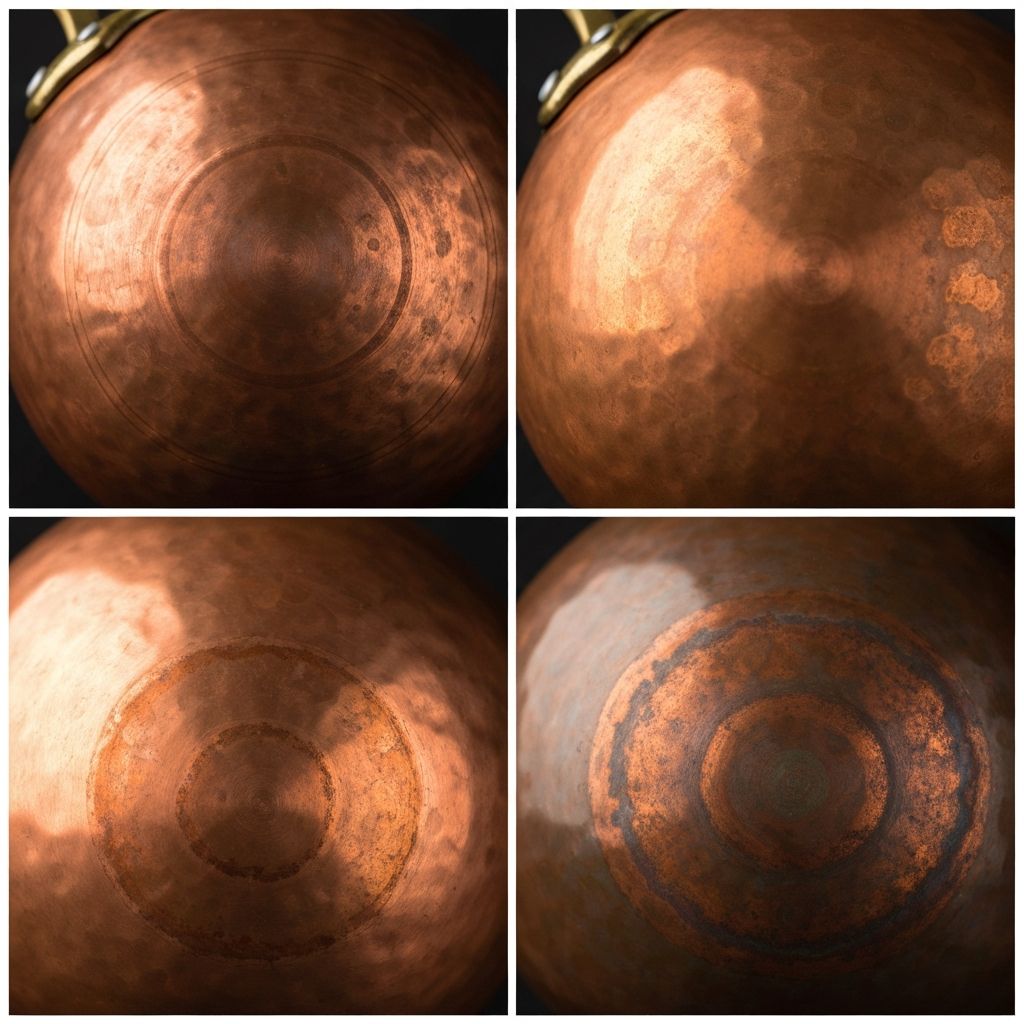
Understanding Copper Patina: A Natural Process
Copper cookware naturally develops a patina over time—a brownish or orange discoloration that forms when copper oxidizes through exposure to air, moisture, and heat. This patina is NOT a defect or sign of poor quality. In fact, it's a testament to the authenticity of your genuine copper cookware.
Many chefs and collectors appreciate the warm, aged appearance that patina provides, as it tells the story of countless meals prepared. However, if you prefer the brilliant shine of polished copper, removing patina is simple with the right techniques. The choice between a polished or patinated look is purely aesthetic—neither affects cooking performance.
Important Note
Patina develops on the exterior copper surface only. The interior tin or stainless steel lining maintains its own characteristics and requires separate care considerations detailed below.
Daily Cleaning: The Foundation of Copper Care
Proper daily cleaning is essential for maintaining your Ruffoni cookware. Follow these expert recommendations to preserve the beauty and performance of your handcrafted copper pieces after every use.
Hand Washing Only
Never place Ruffoni copper cookware in the dishwasher. The harsh detergents and high heat can damage both the copper exterior and the delicate tin lining or ornate handles.
Wash by hand using warm water and mild dish soap. Use a soft sponge or cloth—never abrasive scrubbers or steel wool on copper surfaces.
Dry Immediately
After washing, dry your Ruffoni cookware thoroughly with a soft, clean towel. Never air-dry, as water spots and mineral deposits can form on the copper surface.
Pay special attention to crevices around handles and the junction between copper and any stainless steel components to prevent water accumulation.
Cool Before Cleaning
Always allow your cookware to cool completely before washing. Sudden temperature changes can warp copper and damage tin linings.
Remove cooked food promptly, but let the pan reach room temperature naturally before introducing water.
Remove Food Residue
For stuck-on food, fill the pan with warm water and a drop of dish soap, then let it soak for 10-15 minutes. The residue should release easily with a soft sponge.
For tin-lined pieces, use only wooden or silicone utensils to gently loosen food—never metal scrapers.
How to Polish Copper Cookware: Remove Patina & Restore Shine
Natural Method: Lemon & Salt
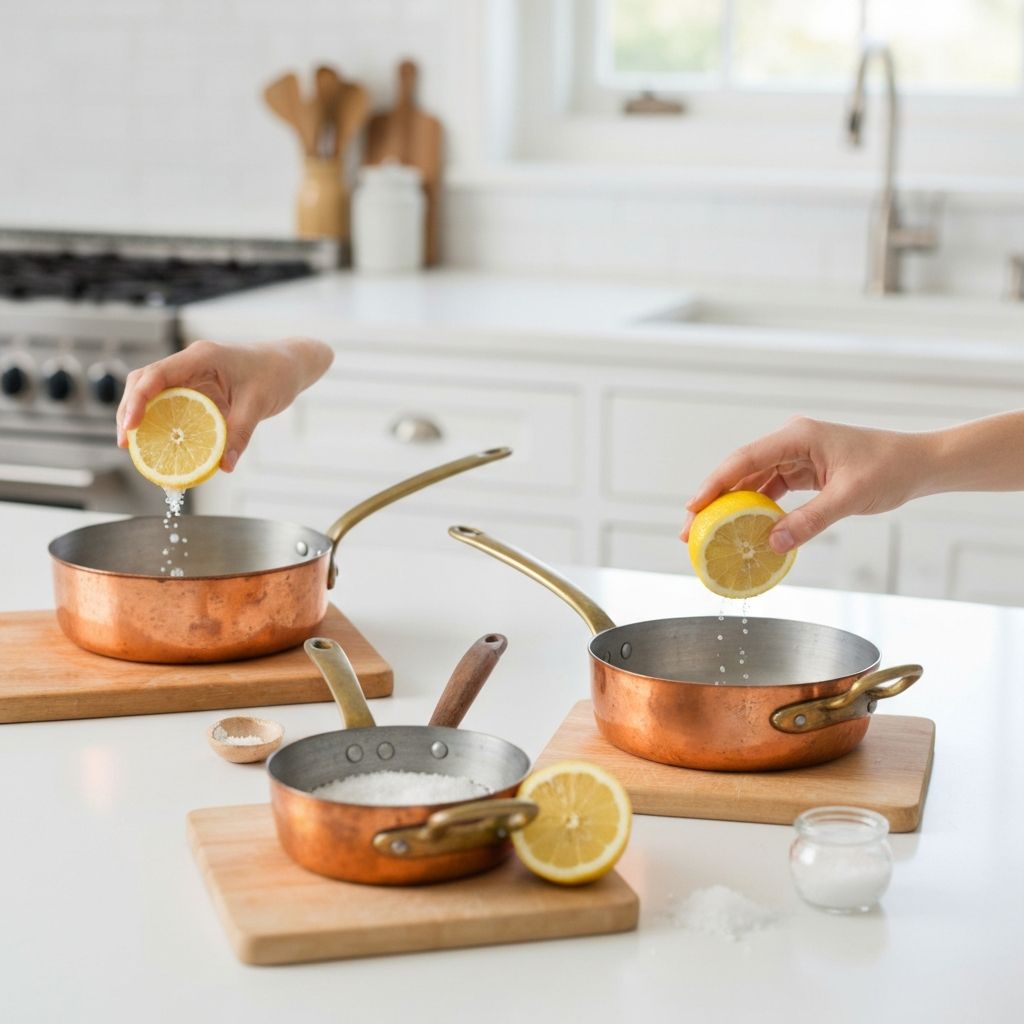
The most popular natural method for cleaning copper patina uses two simple kitchen ingredients: fresh lemon and coarse salt. This eco-friendly approach is gentle yet effective for removing tarnish and restoring shine to Ruffoni cookware.
Step-by-Step Instructions:
- 1.Cut a fresh lemon in half and sprinkle the cut side generously with coarse salt (sea salt or kosher salt works best).
- 2.Rub the salted lemon directly onto the copper surface in circular motions. The acid in the lemon combined with the abrasive salt will lift the patina.
- 3.For stubborn areas, let the lemon juice sit on the copper for 1-2 minutes before scrubbing with a soft cloth.
- 4.Rinse thoroughly with warm water to remove all lemon juice and salt residue. Dry immediately with a soft towel.
- 5.Buff with a clean, dry microfiber cloth to achieve a brilliant shine.
Alternative: You can also make a paste by mixing equal parts lemon juice, salt, and flour. Apply the paste, let it sit for a few minutes, then rinse and dry.
Commercial Method: Copper Polish
For those who prefer a more convenient solution or need to clean larger pieces quickly, commercial copper cleaners provide excellent results. Ruffoni recommends their branded copper cleaner, specifically formulated for handcrafted Italian cookware.
Recommended Products:
- •Ruffoni Branded Copper Cleaner (available from authorized retailers)
- •Wright's Copper Cream
- •Bar Keeper's Friend (use sparingly and rinse thoroughly)
- •Twinkle Copper Cleaner & Polish
Application Instructions:
- 1.Apply a small amount of copper polish to a soft, damp cloth or sponge.
- 2.Rub the polish onto the copper surface using circular motions, covering all tarnished areas.
- 3.Allow the polish to work according to product instructions (typically 30 seconds to 2 minutes).
- 4.Rinse thoroughly with warm water, ensuring all polish residue is removed. Polish residue left on cookware can affect food flavor.
- 5.Dry completely and buff to a brilliant shine with a microfiber cloth.
Polishing Frequency
How often you polish your Ruffoni cookware depends entirely on your aesthetic preference. Some owners polish weekly to maintain a mirror-like shine, while others embrace the natural patina and polish only occasionally for special occasions. For cookware displayed in your kitchen, monthly polishing keeps copper looking its best. Pieces used frequently may develop patina faster and can be polished as needed.
Silver Care: Polishing Ornate Finials & Handles
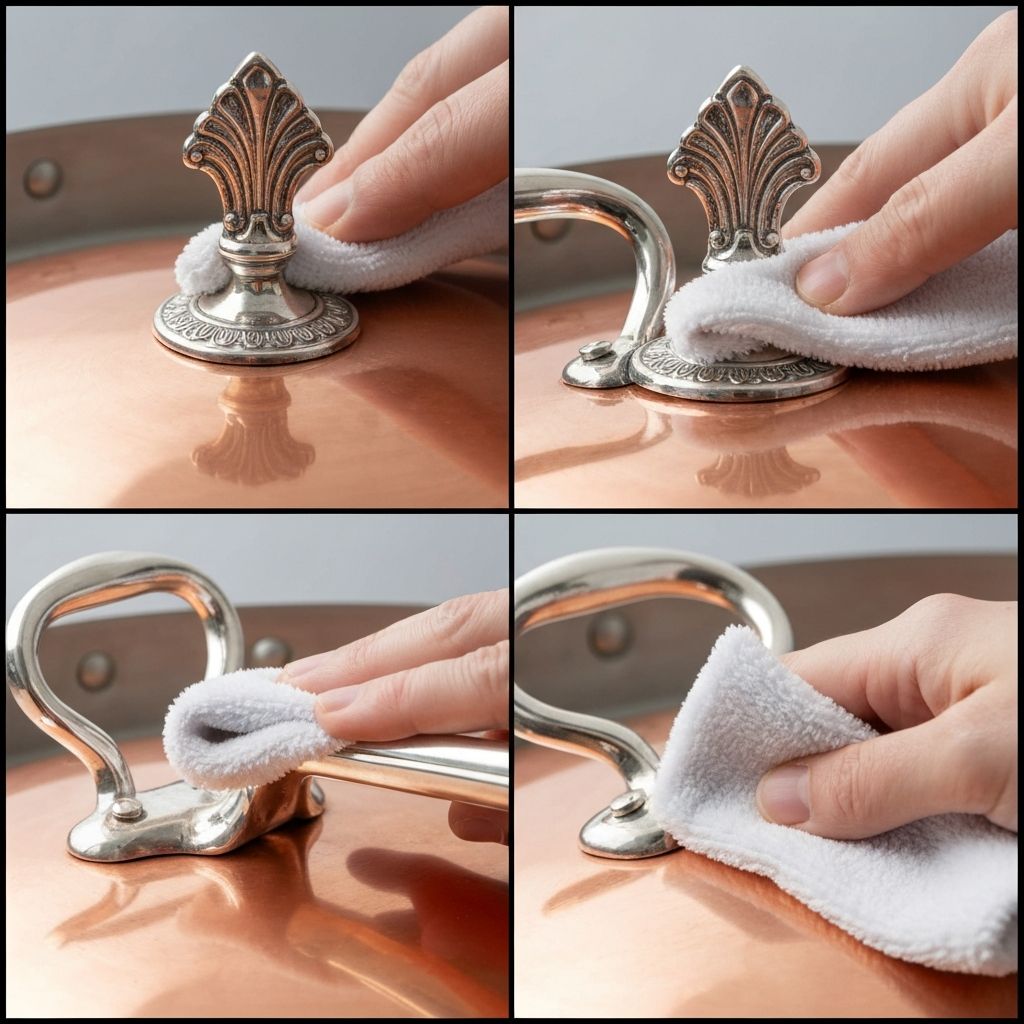
The Opus Cupra and Opus Prima collections feature exquisite silver-plated handles and finials shaped like vegetables, fruits, and other natural forms. These ornate decorative elements require special care to maintain their lustrous appearance and intricate detail.
Caring for Silver-Plated Handles:
- •Use a dedicated silver polishing cloth specifically designed for silver-plated items. These specialized cloths contain gentle cleaning agents that remove tarnish without scratching.
- •Gently rub the silver-plated handles with the polishing cloth, following the natural contours and details of the sculptured design. Pay attention to crevices where tarnish accumulates.
- •Avoid using abrasive cleaners, baking soda, or harsh chemicals on silver-plated surfaces, as these can wear away the silver plating over time.
- •If using liquid silver polish, apply sparingly with a soft cloth and rinse thoroughly to prevent any residue from transferring to food.
- •When washing the entire piece, take care not to submerge ornate handles for extended periods. Clean them gently and dry immediately to prevent water spots.
Professional Tip
The silver-plated handles develop their own subtle patina that many collectors appreciate, as it highlights the intricate details of the artichoke, pumpkin, and mushroom shapes. You can choose to maintain a high polish or allow a gentle antiqued appearance—both are beautiful and appropriate.
Tin Lining Care: Essential Guidelines for Historia Collection
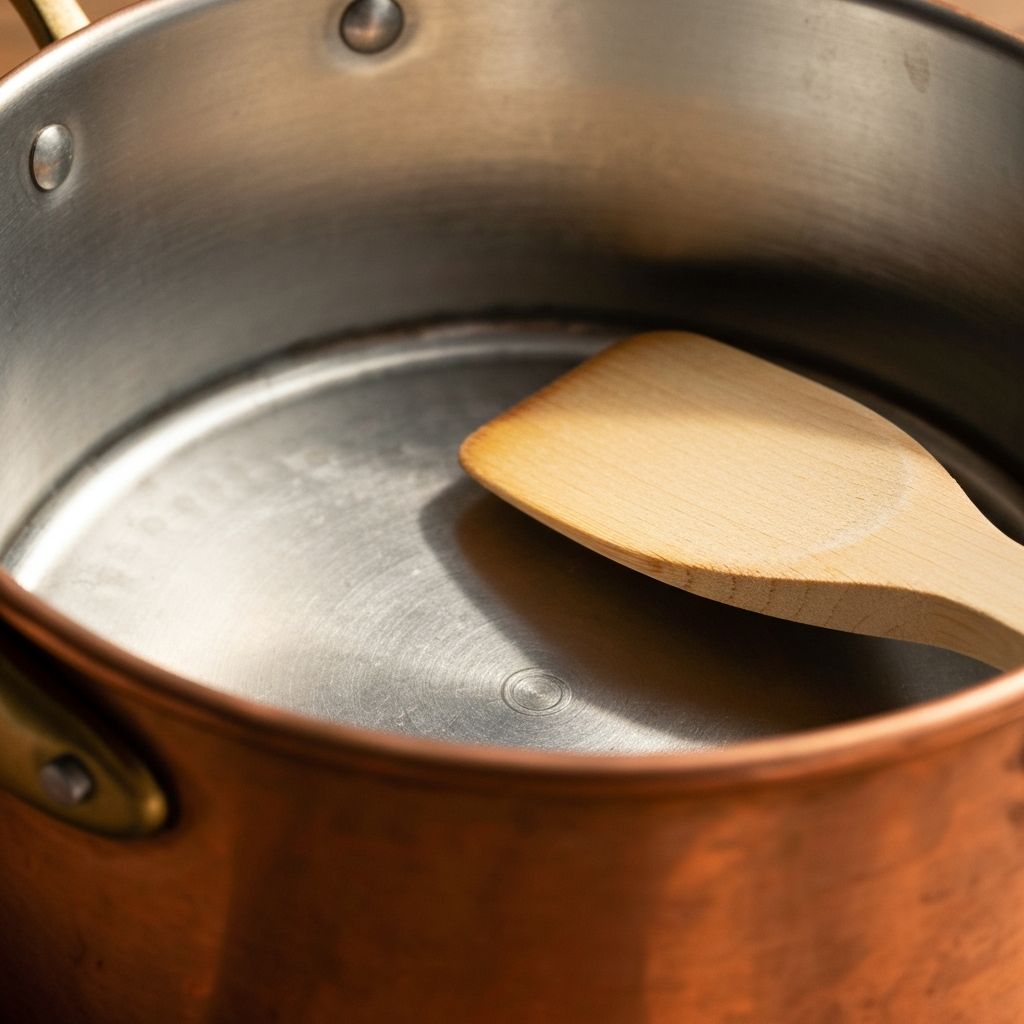
The Historia collection features traditional hand-applied tin lining—a delicate surface that requires careful handling to preserve its integrity and cooking performance.
Never Use Metal Utensils
Metal utensils will scratch and damage the soft tin lining. Always use wooden, silicone, or heat-resistant nylon utensils when cooking with tin-lined copper cookware. Even minor scratches can compromise the tin surface over time.
Never Scrub with Abrasives
Steel wool, abrasive scouring pads, and harsh cleaning powders will damage the tin lining permanently. Use only soft sponges or cloths with mild dish soap. For stuck food, soak in warm soapy water rather than scrubbing aggressively.
Never Heat When Empty
Tin melts at approximately 450°F (232°C). Never preheat empty tin-lined cookware or heat it above medium-high. Always add butter, oil, or food before heating. Overheating can cause the tin lining to melt or separate from the copper.
Understanding Tin Lining Maintenance
The hand-applied tin lining in Historia cookware provides a naturally non-reactive cooking surface that won't interact with acidic foods. This traditional lining method has been used for centuries and is prized by professional chefs for its superior cooking properties.
Over time and with proper use, the tin lining may develop a silvery-gray patina or show slight wear patterns. This is normal and does not affect cooking performance. However, if the copper beneath becomes visible in multiple spots, the cookware should be professionally retinned.
Retinning Copper Pans
When copper shows through the tin lining in several places (typically after decades of use), professional retinning is recommended. Contact Ruffoni or a qualified coppersmith who specializes in hand-tinning to restore your cookware. Proper retinning can extend the life of your copper pieces indefinitely.
Retinning frequency varies based on usage—typically every 10-20 years for home cooks, more frequently for professional kitchens.
Proper Storage for Ruffoni Cookware Maintenance
Proper storage protects your Ruffoni cookware investment and keeps pieces looking beautiful between uses. Follow these professional recommendations to prevent damage and maintain optimal condition.
Storage Best Practices:
- •Hang pots and pans from a pot rack if possible. This prevents scratching and allows air circulation around copper surfaces.
- •If stacking is necessary, place soft cloth or felt protectors between pieces to prevent scratches on both copper exteriors and delicate tin linings.
- •Store in a dry environment to minimize oxidation and patina formation. Avoid humid storage areas.
- •Keep lids separated from pots or use protective padding to prevent handle damage and pressure on ornate finials.
- •For display storage, consider open shelving or glass cabinets where your Ruffoni cookware becomes part of your kitchen decor—these pieces are too beautiful to hide!
- •Ensure cookware is completely dry before storage to prevent water spots and accelerated patina development.

Quick Reference: Ruffoni Cookware Care by Collection
| Collection | Exterior Care | Interior Care | Handle Care | Dishwasher Safe |
|---|---|---|---|---|
| Historia | Polish copper with lemon/salt or copper cleaner | Gentle hand wash only; never metal utensils | Polish bronze handles gently | No |
| Opus Cupra | Polish copper with lemon/salt or copper cleaner | Hand wash stainless steel lining | Polish silver finials with silver cloth | No |
| Opus Prima | Wipe stainless exterior with soft cloth | Hand wash stainless steel lining | Polish silver finials with silver cloth | Yes |
| Symphonia Cupra | Polish copper with lemon/salt or copper cleaner | Hand wash stainless steel lining | Clean stainless handles with damp cloth | No |
| Symphonia Prima | Wipe stainless exterior with soft cloth | Hand wash stainless steel lining | Clean stainless handles with damp cloth | Yes |
Note: Even for dishwasher-safe collections, hand washing is recommended to preserve the pristine condition and longevity of your Ruffoni cookware.
Preserving Italian Craftsmanship for Generations
With proper care and maintenance, your Ruffoni cookware will provide exceptional cooking performance and timeless beauty for decades to come. Each piece represents hundreds of hours of artisan craftsmanship—care for it accordingly, and it will become a treasured heirloom passed down through your family.
For specific questions about caring for your Ruffoni cookware or professional retinning services, contact Ruffoni customer service or an authorized retailer. Our craftsmen and customer care specialists are here to help you preserve your investment.